• Accessibility
      Font
    • A+
    • Aa


  • Events
  • Search
  • en
    • pt
  • Bienal
  • About Us
  • From Bienal to Bienal
  • Events
  • +Bienal
  • Library
  • Historical Archive
  • Partners
  • Transparency
  • Bienal Café
  • Contact us
  • Press
  • Visual Identity
Home Articles f.marquespenteado: profile

22 Apr 2023

f.marquespenteado: profile

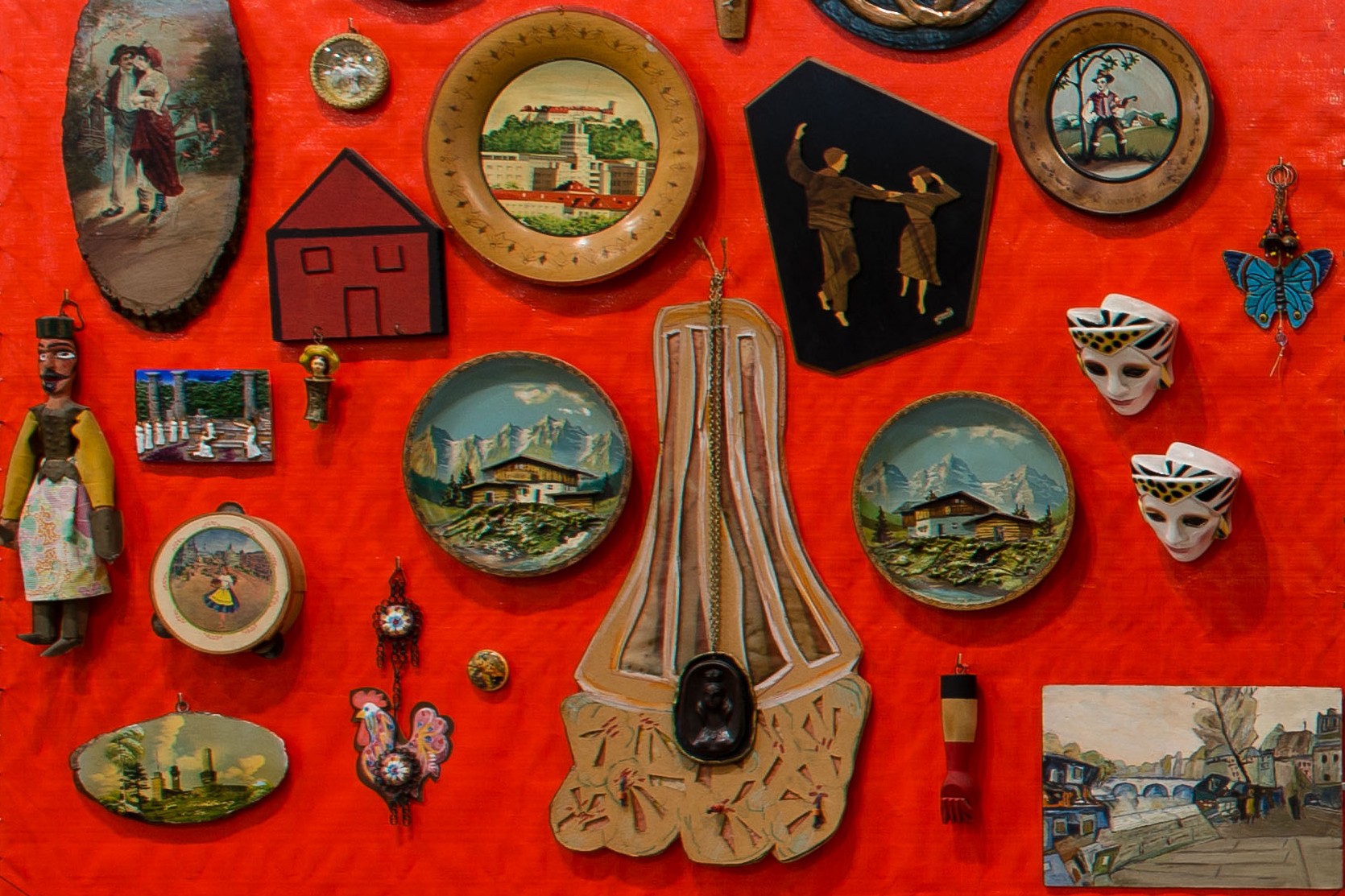
Fernando Marques Penteado, <i>Fruteira</i>, da série <i>Mandala Disfuncional</i>, 2014, colagem bordada à mão e máquina sobre feltro industrial, crochê e aplicação de musseline pintada, 85 x 78 cm. Cortesia do artista
Works of f.marquespenteado during the 30th Bienal de São Paulo © Leo Eloy / Fundação Bienal de São Paulo


f.marquespenteado (1955, São Paulo, Brazil) signs his name in this fashion, without using capital letters, so common to proper names, and without showing the gender. Sewing multiple stories and voices, his embroideries have more than behind the scenes as supports, sustained by plastic bread baskets, tennis rackets and fly swatters. Postcards, photographs, belongings, drawings and even personal clothing are part of his works, which end up mirroring, in the places where they are exhibited, the artist’s very intimate universe.

In recent years, f.marquespenteado has been collecting crime and detective books, in which he underlines catchphrases and then transfers them to the mouths of fictional characters, around whom orbit clues about their stories and personal characteristics.

His works participated in the 30th São Paulo Biennial – The Imminence of Poetics, in 2012, which was curated by Luis Pérez-Oramas.
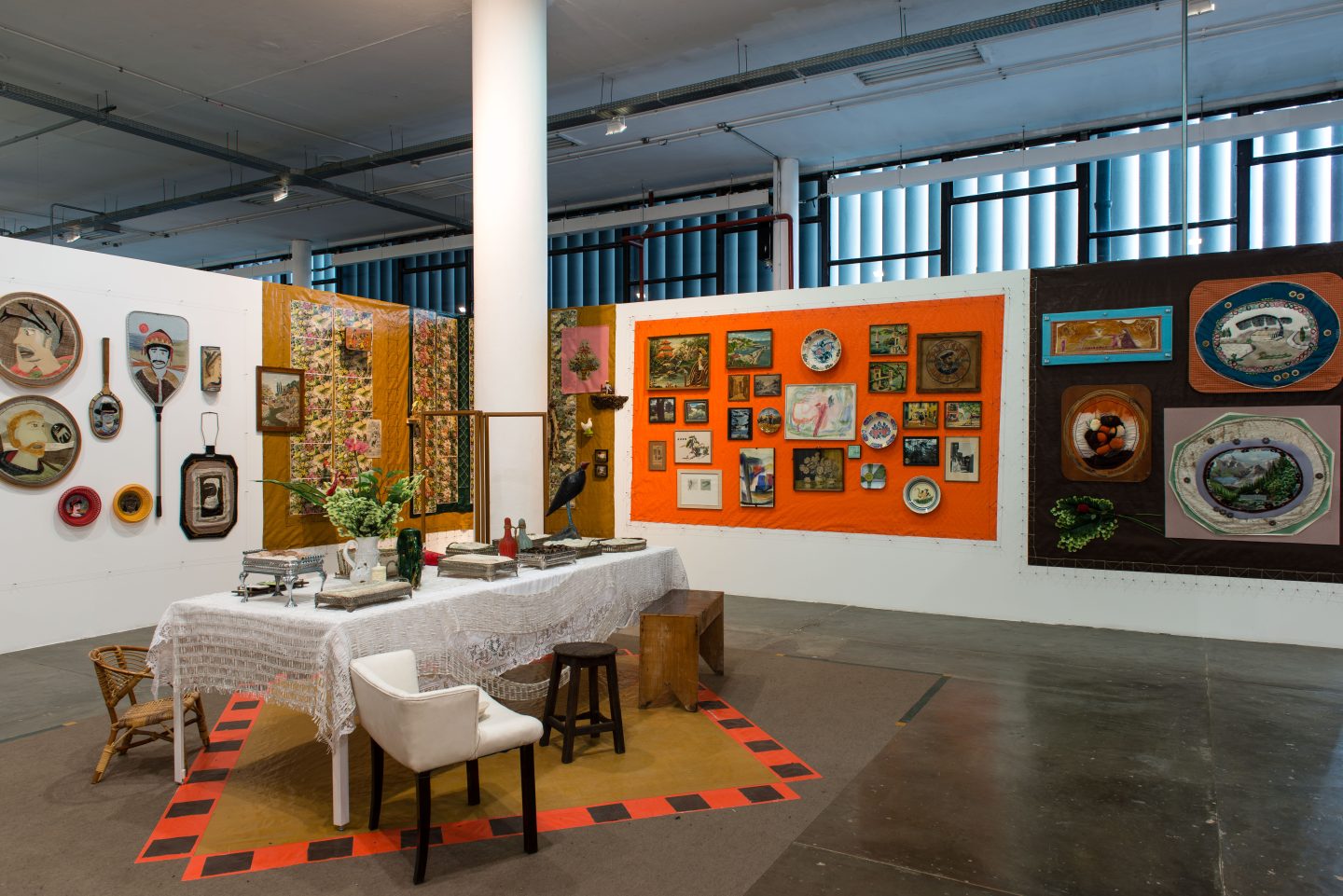
 

Sala da trigésima Bienal com paredes repletas de obras de f.marquespenteado. À esquerda, uma parede com raquetes com rostos bordados dentro delas, no centro tapeçarias, uma coluna branca, uma parede com um pano laranja que separa diferentes pinturas e pratos e à direita, uma parede preta com bordados. No centro destaca-se uma mesa com cadeiras em volta e objetos acima dela.
Register of works by f.marquespenteado during the 30th Bienal de São Paulo © Leo Eloy / Fundação Bienal de São Paulo


Embroydery as Memory

I have had the honor of collecting, assembling and re-presenting materials that I was able to save from the rest in which they lived on: old, hidden, dirty on the sidewalks of markets. With this gesture I reinvigorate them, I activate the reminder of their intrinsic nobility, much of this through their “original”, impeccable, astute patches – elaborated by a generation of people who understood very, very, very well the virtuous ecological circle inscribed in the production of a single piece of fabric.

Other materials that honor me with their presence present me with signs of the times, marks of the incursion of an inclement sun. Still others show signs of sweat and body fluids. Others showcase the engineering mastery of a unique model. There are many other artists like me, in this same arena of memory, seeking to honor the craftsmen of times past and thereby add the contemporary gesture to the actions of that time.
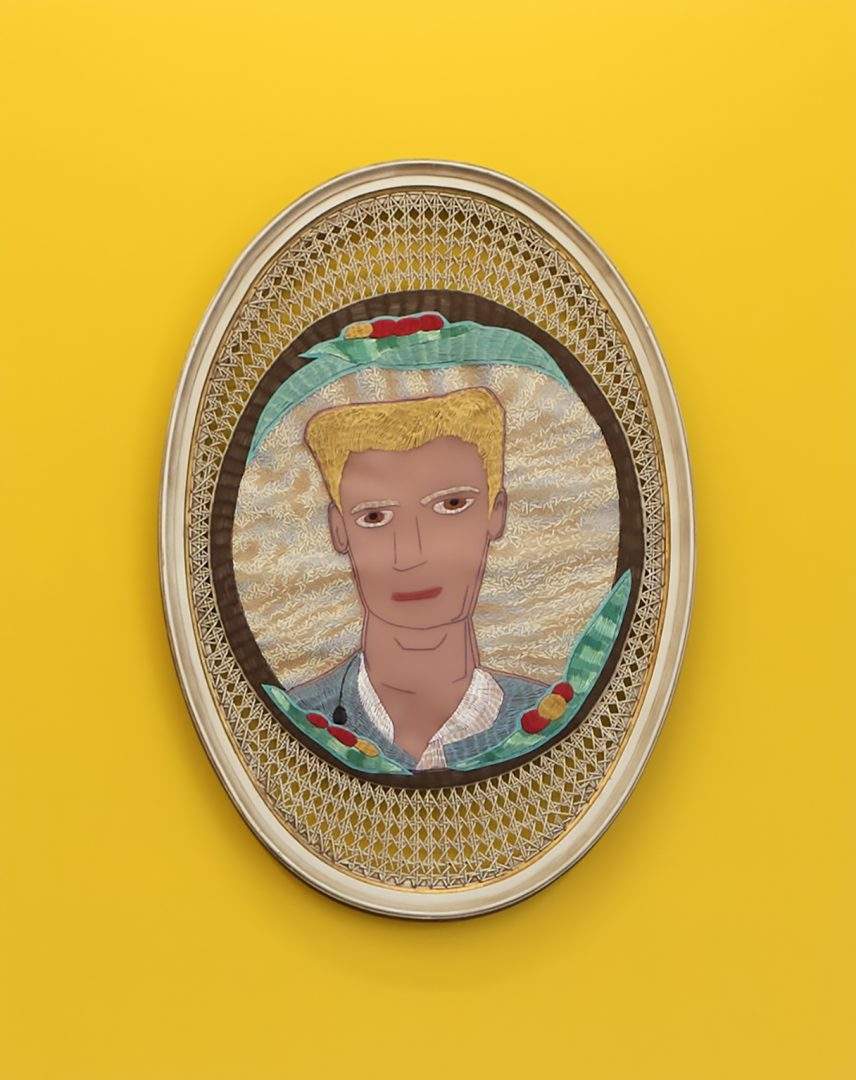
Obra de f.marquespenteado em formato elíptico feita de um cesto com um bordado colado ao centro que representa um homem loiro. A obra está apoiada sobre uma parede amarela.
Fernando Marques Penteado, Xavier Vandenbroucke [XV], 2020, colagem, bordado a mão em PVC, vime, madeira, 88 x 64 cm. Cortesia do artista e Mendes Wood DM São Paulo, Bruxelas, Nova York. Crédito da foto: Kristien Daem

Exchanging Biographies

I think there is nothing more essential and human than the frank exchange of biographies, so it is not at all difficult for me to share the stories inscribed in my house, a place that is in fact where anyone can get to know the best of me. I am always impressed by the difficulty many people show in revealing themselves, in spontaneously approaching their universes, from ideas to feelings.
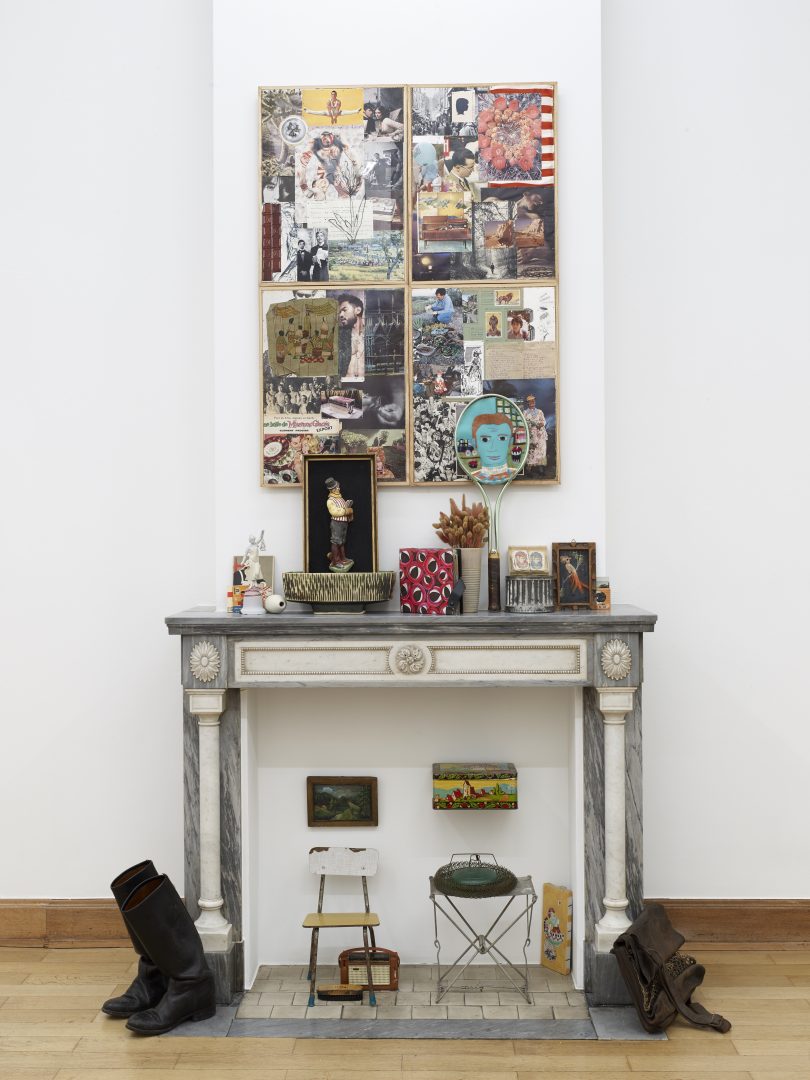
 

Instalação de f.marquespenteado com objetos ao redor de uma mesa que lembra uma lareira desativada. Acima da lareira há obras de f.marquespenteado e objetos, pendurado na parede acima há quatro telas que formam um políptico feito de colagens de revistas. Abaixo da lareira há um par de botas, uma cadeirinha com uma mini-pintura em cima e outros mini-objetos. Do outro lado há uma bolsa apoiada. A parede é branca e o chão é de taco marrom-claro.
Fernando Marques Penteado, Xavier Vandenbroucke [XV] – Story, 2020collage on corkboard, paper, textiles, racket, cotton and linen thread, ballpoint pen, PVC, hand embroidery, found objects, dimensions variable. Courtesy of the artist and Mendes Wood DM São Paulo, Brussels, New YorkPhoto credit: Kristien Daem

What has changed since the 30th Bienal, in 2012?

As the strongest arm of my contemporary work is the creation of different fictional subjects (embroidered portraits), it will then be the same invented biographies, with their crossroads and exits, that will account for changes in the contemporary world as I perceive it. It is these fictional voices that begin to narrate the afflictions, the confrontations and the conquests that men and women have been acquiring, when they fall and then stand up again, especially in the territories and values where sexuality and gender are inscribed.
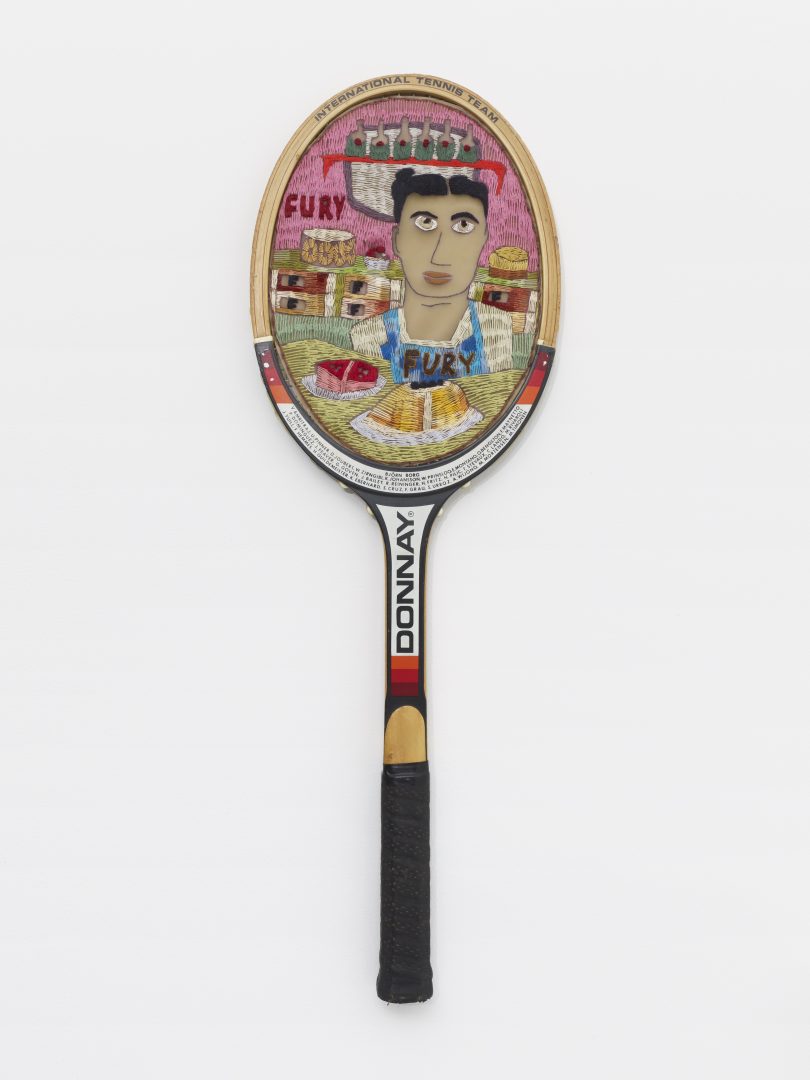
 

Obra de f.marquespenteado que é feita de uma raquete cuja rede foi substituída por um bordado que mostra uma mulher olhando para o céu vestindo um macacão escrito Fury, palavra que também aparece no céu rosa atrás dela, que parece ser uma atendente pois leva uma bandeja de bebidas acima da sua cabeça.
Fernando Marques Penteado, Maximo Balduccio [MB], 2022, raquete, linha de algodão e linho, caneta tinteiro, PVC, bordado à mão, 68 x 23 cm. Cortesia do artista e Mendes Wood DM São Paulo, Bruxelas, New York. Crédito da foto: Kristien Daem

Weaving Versus Embroidering

Here, and without any pedagogical ambition, I have to clarify that my work does not imply “weaving” something: I was never interested in looms nor in the severe crossing of threads that is required to form a woven piece. My work celebrates embroidery, which is a topical technique: in short, something is added to a fabric or canvas, either adding thread to the work or removing threads from the fabric to create patterns.
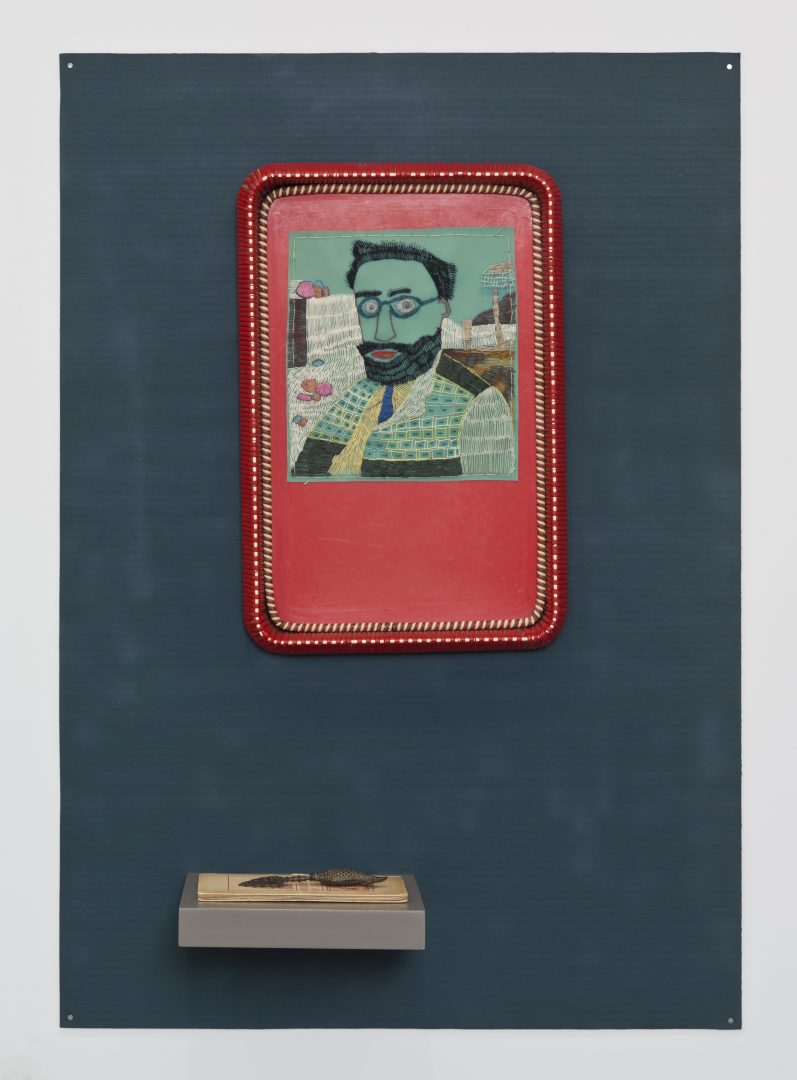
 

Fernando Marques Penteado, [OE] Ólafur ErduArbjörnsson, 2016, bandeja de madeira com decoração de plástico, superfície de plástico bordado à mão, prateleira de madeira, livro, porta-perfume, 105 x 74 x 24 cm. Cortesia do artista e Mendes Wood DM São Paulo, Bruxelas, Nova York. Crédito da foto: Raphael Fanelli

Read too


Access +bienal
Uma grande escultura que lembra um tronco de árvore com raízes, feita de longas tiras de tecido suspensas em tons de marrom, laranja e amarelo. Em sua base, várias pedras naturais estão dispostas sobre pequenas placas escuras no piso de concreto de uma galeria.
Installation view of Terra viva by Marlene Almeida during the 36th Bienal de São Paulo© Natt Fejfar / Fundação Bienal de São Paulo
Interviews24 Jul 2026

Living Earth: Interview with Marlene Almeida

Earth samples collected from different regions of Brazil are processed into pigments or left in their raw state in a kind of laboratory. A sculpture composed of long strips of fabric dyed with natural pigments evokes a rock or a network of trails waiting to be explored. Technique and poetics come together in Terra viva [Living Earth] by Marlene Almeida, an installation created especially for the 36th Bienal de São Paulo. The work is now part of the Bienal’s traveling exhibition in Fortaleza. Read the artist’s statement.

Learn more
Uma pessoa com cabelo curto e encaracolado, vestindo uma camisa branca, um colete estampado e calças largas escuras, está em meio a uma instalação de arte. A instalação apresenta inúmeras hastes de metal escuras e retorcidas, semelhantes a raízes ou galhos, que cobrem o chão e se elevam ao redor da pessoa. Cortinas altas, de cor laranja claro, estão ao fundo.
Artist Rebeca Carapiá with her sculptures during the 36th Bienal de São Paulo© Levi Fanan / Fundação Bienal de São Paulo
News23 Jun 2026

How to grow aerial roots: interview with Rebeca Carapiá

The walking palm trees known as paxiúbas (Socratea exorrhiza) were Rebeca Carapiá’s companions during the days she spent along the Tupana River in the Amazon basin. Using steel, carbon, and copper, the artist spent months casting a forest of sculptures centered on an exploration of language, transformation, wandering, the body, life, and death. Her works are now part of the traveling exhibition of the 36th Bienal in Santos. Read the artist’s full statement below.

Learn more
Foto da equipe curatorial da 37ª Bienal, que é composta de nove pessoas, todas de pé, uma ao lado da outra, diante do vão central do Pavilhão da Bienal, um prédio branco, com rampas curvadas, uma coluna central e outras laterais. As pessoas são de diversas cores, etnias e idades, e estão todas usando roupas com tons escuros, e sorriem.
From left to right: Rado Ištok, Mayara Carvalho, Amanda Carneiro, Ryan Inouye, Yina Jiménez Suriel, Ana Salazar Herrera, Amanda Tavares, Raphael Fonseca, and Léuli Eshrāghi, the curatorial team of the 37th Bienal de São Paulo.© Camila Tuon / Fundação Bienal de São Paulo
News2 Jun 2026

The Fundação Bienal de São Paulo announces the curatorial team for the 37th Bienal de São Paulo

The curatorial team, led by chief curators Amanda Carneiro and Raphael Fonseca, brings together nine professionals from across the globe.

Learn more

Newsletter

Subscribe to the Bienal newsletter

Bienal

  • About Us
  • From Bienal to Bienal
  • Events
  • +Bienal
  • Library
  • Partners
  • Bienal Café
  • Transparency

  • Contact us
  • Visual Identity

Fundação Bienal de São Paulo

Av. Pedro Álvares Cabral, s/n - Moema CEP 04094-050 / São Paulo - SP

Contact

+55 11 5576.7600 contato@bienal.org.br

Privacy
•
Terms of use
Copyright © 2026 Bienal de São Paulo
Ao clicar em "Concordar", você concorda com uso de cookies para melhorar e personalizar sua experiência, bem como nossa Política de Privacidade. Ver a Política de Privacidade*.
Concordar